Lavellan: Key Points
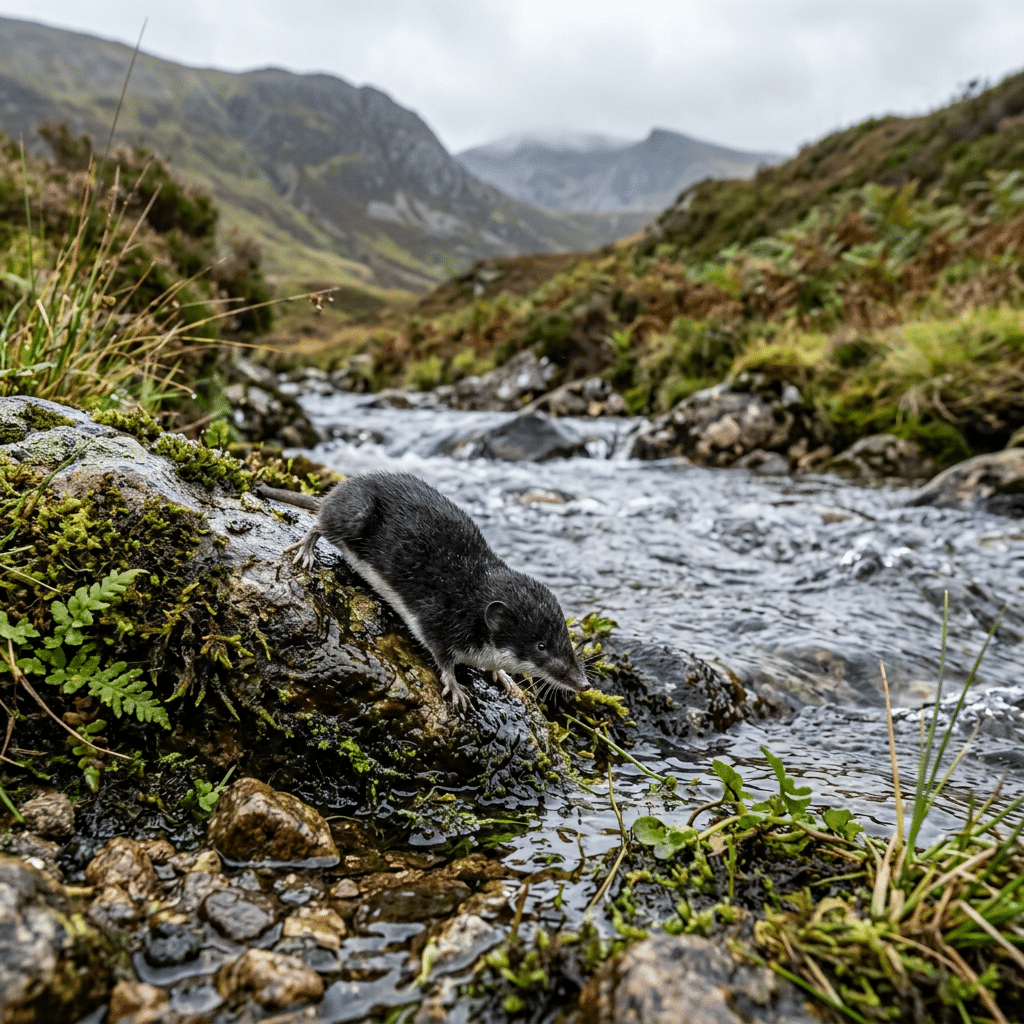
- The lavellan is a Scottish folkloric creature resembling a large rat or lizard that lives near rivers, ponds, and marshes.
- It was said to have deadly poisonous breath and venomous saliva, making it dangerous to people and livestock.
- Early writers such as Robert Sibbald and Thomas Pennant recorded local stories about the creature.
- The lavellan was not a deliberate hoax but a legend that spread through folklore and oral tradition.
- Most scholars believe the legend originated from the Eurasian water shrew, whose venom was greatly exaggerated.
- The lavellan remains an example of how ordinary animals can become legendary cryptids through storytelling.

Introduction
The lavellan is one of the oddest animals in Scottish mythology in that it combines the attributes of a frightening supernatural monster with those of an ordinary native animal. Excluding the famous giants or dragons, the lavellan is usually portrayed as a relatively little beast with exceptional and terrible powers. Tales tell of it living in rivers, ponds, marshes, and other wetlands in the Scottish Highlands, where its toxic breath, venomous saliva, and blood-sucking ways make it a danger to both humans and livestock. Though most current scholars believe the mythology derived from exaggerated accounts of real creatures (particularly the Eurasian water shrew), the lavellan remains an intriguing example of how folklore can transform a mundane animal into a legendary monster. The account of the Lavellan also illustrates how folklore, early natural history, and later scholarly interpretation often overlapped in the emergence of cryptid traditions.
Physical Description and Habitat
Descriptions of the lavellan differ from source to source, although some physical traits are repeated. Usually it is depicted as looking like a giant rat with coarse brown or agouti-colored fur. The head is sometimes likened to that of a giant mouse or rat; however, some stories report a lizard-like look instead. Another characteristic is its bright, flashing eyes, which adds to its frightening reputation. The creature is said to be quick and agile, able to disappear into the forest or water before being caught. DeMello (2024) notes that the lavellan is common in rivers and ponds across Scotland and is notably linked with the northern counties of Caithness and Sutherland. The early descriptions characterize it as an aquatic or semi-aquatic mammal spending significant time in the vicinity of freshwater settings.

Poisonous Powers and Folk Remedies
The lavellan’s fearsome reputation hinges almost completely on its purported poison. In Scottish legend it is said that its breath is strong enough to kill a man or animal from distances of up to a hundred feet. Its saliva is equally poisonous, and some accounts claim that drinking water contaminated by the monster can be fatal. Occasionally the death of stock was blamed on the presence of a Lavellan, and the finding of dead cattle near streams or ponds was accepted as evidence that one was around. Folklore also labels the creature a bloodsucker, which adds to the ominous nature in the public mind. But there is a strange inconsistency in these accounts. Contact with the living creature was thought to be fatal, but water in which the preserved skin or head of a lavellan had been placed was thought to provide a powerful antidote to poisoning induced by the animal itself. This combination of poison and therapy is a prevalent pattern in traditional medicine where the source of an ailment was considered to contain its cure (Campbell, 1900).
Historical and Literary Accounts
Lavellan has a lengthy tradition in Scottish literature and early science writing. One of the first known references is in Scotia Illustrata, by Robert Sibbald, published in 1684. Sibbald reported an animal abundant in Caithness, which inhabited the water and had a head like a weasel, and whose breath was said to be harmful (Raye, 2018). Sibbald noted down these ideas but provided no conclusive evidence that such a terrible creature really existed. His work preserved the indigenous traditions that flowed among the highland villages.
Other stories appeared during the seventeenth century in the writings of the Welsh naturalist Thomas Pennant. In his travels in the Highlands of Scotland, Pennant asked several of the inhabitants of Ausdale about the lavellan. Locals repeated the ancient idea that it was hazardous to cattle and said that sick animals might be treated by drinking water in which the skin of a lavellan had been steeped. However, Pennant was skeptical of these claims and concluded that the legendary creature was likely an exaggerated version of the water shrew. His perspective proved crucial and still influences modern studies (Raye, 2018).
The lavellan can also be found in Scottish oral tradition and literature. The Sutherland poet Rob Donn put the creature into a sonnet threatening youngsters against going into the woods or marshes where the lavellan could capture them (Campbell, 1900). This short reference implies that the animal was more than a terrifying creature. It was also a warning figure to keep youngsters out of dangerous wetlands where there was a real danger of drowning or exposure.
Contrary to many well-known cryptids, the lavellan isn’t associated with a calculated fake. There is no record in history of people making footprints, creating fake specimens, or deliberately trying to deceive the public, as in the case of the Cardiff Giant or the Feejee Mermaid. The Lavellan, instead, had emerged gradually out of mythology, the retelling of tales, and misconceptions of nature. Early naturalists recorded local beliefs because they were interested in recording the natural world, even when those beliefs combined observation with superstition. Slowly, by copying these tales into later works, the Lavellan gained knowledge of those outside the Highlands. The mythology grew in this sense through repetition, not by deceit. If any misunderstanding arose, it was the consequence of honest belief, not deliberate misrepresentation.
Modern Explanations and Interpretations
Contemporary scholars largely disagree that the lavellan was a different species. The custom most likely originates from the Eurasian water shrew, according to DeMello (2024). The water shrew is a tiny mammal found over most of Europe, including Scotland. Its saliva is poisonous, unlike that of most mammals, and it helps to paralyze prey. The venom is not hazardous to people under regular circumstances, but the knowledge that the animal had toxic saliva may have gotten exaggerated over generations of myth-telling. The snake’s tongue was just somewhat venomous, but it became deadly poison. Breathing was a fatal weapon that kills from astonishing distances.
Other natural causes have been suggested too. Some academics have hypothesized that the water vole may have been included in accounts due to its affinity with rivers and marshes. Some academics have suggested that the water vole’s affinity with rivers and marshes may have led to its inclusion in accounts. The water vole is included in accounts due to its affinity with rivers and marshes. Others have mentioned the stoat. It is not venomous; however, it was long thought to have deadly properties. All of these species share similarities with the descriptions of the lavellan, as they are small, move quickly, and are often found near water. All of these species share similarities with the Lavellan’s descriptions; they are small, move quickly, and are often found near water. These species are characterized by their quick movement and their presence near water. None, however, explains all aspects of the tale.
Another explanation concentrates on the social purpose of the legend instead of its biological basis. Folklorists have suggested that the Lavellan was a boogeyman used to scare children away from dangerous sources of water. Before safety lessons were taught, stories about dangerous animals kept kids safe by telling them to stay away from rivers, bogs, and marshes. Rob Donn’s verse provides significant confirmation of this interpretation, for it advises youngsters against venturing into lonely regions where the lavellan might attack. European folklore features such cautionary monsters, demonstrating that the lavellan served as an instructional tool within Highland societies. This cautionary approach is evident throughout European folklore, which shows that the lavellan served as a tool for instruction within Highland societies.
Some authors have associated the lavellan with larger traditions about supernatural beings living in untamed terrains. Scottish folklore has long regarded wetlands, rivers, and lonely pools as habitats for mysterious beings. These were places where water horses, kelpies, and other scary things were thought to dwell. This bigger tradition can easily accommodate the Lavellan as another concealed threat lying beneath the surface of supposedly calm waters (Holland, 2015). It looks like a mammal but its supernatural qualities put it in the category of mythical creatures rather than regular fauna.
As Nicholas Redfern (2016) notes, there are numerous instances in Scottish folklore where strange creatures are associated with otherworldly beliefs. Such traditions are generally efforts to explain unusual deaths, unexplainable illnesses, or dangerous terrain that occurred before the widespread acceptance of science. For the Lavellan, inexplicable livestock fatalities or illnesses may have served to bolster the idea of a toxic creature inhabiting the vicinity of local waterways. Once a culture accepts these explanations, oral tradition can carry them on for generations.
Conclusion
The lavellan is a fascinating case of how folklore can turn an ordinary animal into a fantastic monster. It looks very much like some of the real creatures endemic to Scotland, but generations of storytelling have given it a deadly breath, toxic saliva, and magical powers. Sibbald and Pennant’s stories show that the creature’s acceptance was broad enough to deserve the attention of early naturalists, and subsequent scholarship has mainly decided that hyperbolic observations of the Eurasian water shrew are the most plausible explanations. But the lavellan is a significant part of Scottish folklore, as it illustrates the connection between cultural traditions, practical warnings, and natural history. cultural traditions, practical warnings, and natural history The lavellan plays a significant role in Scottish folklore, illustrating the connection between cultural traditions, practical warnings, and natural history. Whether it is a misunderstood animal, a cautionary tale for youngsters, or a fabled monster of the Highlands, the lavellan remains a fascinating reminder that some of the most enduring cryptids do not come from deliberate deceit but from generations of human imagination and storytelling.
References
Campbell, J. G. (1900). Superstitions of the Highlands and Islands of Scotland. James MacLehose and Sons.
DeMello, M. (2024). Lavellan. In Bigfoot to Mothman: A global encyclopedia of legendary beasts and monsters. Bloomsbury Academic.
Holland, R. (2015). Legends & folklore Scotland. Bradwell Books.
Pennant, T. (1774). A tour in Scotland and voyage to the Hebrides.
Raye, L. (2018). Robert Sibbald’s Scotia Illustrata (1684): A faunal baseline for Britain. Notes and Records: The Royal Society Journal of the History of Science, 72(3), 383–405.
Redfern, N. (2016). Nessie: Exploring the supernatural origins of the Loch Ness monster. Llewellyn Publications.
Sibbald, R. (1684). Scotia illustrata.
Leave a Reply